

Readiness for Learning
At Wrockwardine Wood Infant School and Oakengates Nursery Federation, we place a strong emphasis on emotional wellbeing and self-regulation, as these are fundamental to children’s readiness for learning, positive behaviour and healthy relationships.
We use the Zones of Regulation, developed by Leah M. Kuypers, to help children recognise, understand and manage their feelings in a supportive and developmentally appropriate way.
What Are the Zones of Regulation?
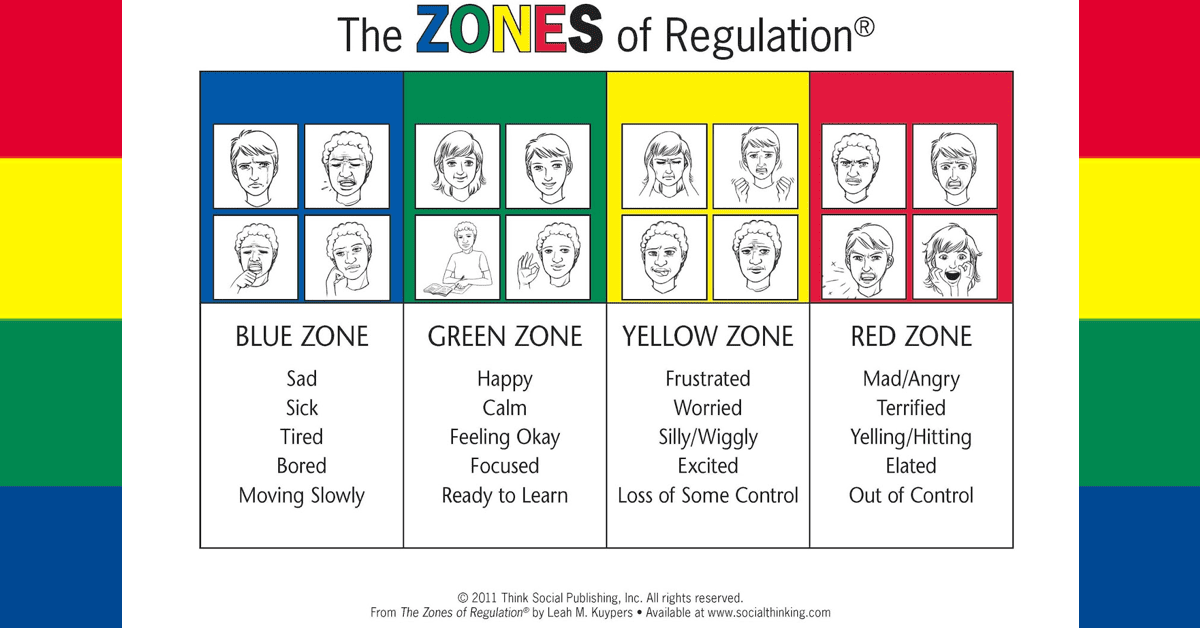
The Zones of Regulation use four coloured zones to help children identify how they are feeling and what they might need to help themselves regulate.
-
Blue Zone – Low energy emotions
(e.g. tired, sad, unwell, worried) -
Green Zone – Calm, happy and ready to learn
(e.g. focused, content, relaxed) -
Yellow Zone – Heightened emotions
(e.g. excited, frustrated, anxious, silly) -
Red Zone – Very strong emotions
(e.g. angry, overwhelmed, out of control)
Children are taught that all feelings are valid, but not all behaviours are appropriate. The focus is on helping children recognise their emotions and learn safe, effective ways to regulate them.
Regulation Stations
Every learning environment has a Regulation Station. These are calm, supportive spaces where children can:
-
Pause and reflect on how they are feeling
-
Identify which zone they are in
-
Use strategies to help them regulate
-
Be supported by an adult through co-regulation
We know from first hand experience that children do not learn self-regulation on their own. They need attuned adults who help them recognise emotions, make sense of them, and gradually develop strategies to manage them.
Regulation Stations are a supportive tool to help children return to a calm, regulated state and feel ready to learn again.
The Road to Regulation
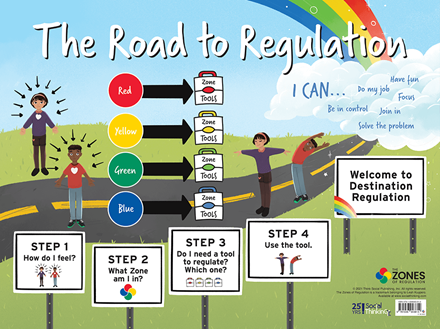
Every Regulation Station includes a Road to Regulation poster.
The Road to Regulation visually supports children to understand that moving between emotional states is a process, and that there are steps they can take to help themselves return to a calm, regulated state.
The poster helps children to:
-
Recognise which zone they are currently in
-
Understand that big emotions are part of being human
-
Learn that regulation takes time and support
-
Choose appropriate strategies to help them move back towards the Green Zone
Adults use the Road to Regulation during co-regulation, modelling language such as:
-
“I can see you’re in the Yellow Zone – let’s look at what might help.”
-
“You’re on the road back to Green; what could you try next?”
This shared visual ensures a consistent approach across all classrooms, supports children during transitions, and helps develop a common language for emotional regulation throughout the school.
Regulation Toolboxes
Each classroom also has a Regulation Toolbox, which contains practical strategies and resources that children can use to help regulate their emotions.
These may include:
-
Sensory resources (e.g. stress balls, fiddle toys)
-
Breathing and calming cards
-
Visual supports linked to the zones
-
Quiet activities for calming and refocusing
-
Emotion visuals and prompts
Toolboxes are used flexibly and consistently across the school to ensure equity, familiarity and smooth transitions for all children.
Our Relational Approach to Behaviour
Our approach to behaviour is relational, not punitive. We focus on understanding what a child’s behaviour is telling us, rather than labelling or diagnosing.
We ask:
-
What is this child communicating?
-
What do they need right now?
-
How can we help them feel safe, heard and supported?
-
What will help them learn from this experience?
Children are given a voice, supported to develop a sense of agency, and helped to build the skills they need to manage emotions over time.
How We Support Self-Regulation (Co-Regulation)
Developing self-regulation grows out of warm, responsive relationships. Our pedagogy includes clear co-regulation strategies based on three key principles:
1. Positive Relationships
Children experience warm, respectful relationships where they feel safe, comforted and supported, especially during times of stress or dysregulation.
2. Enabling Environments
Our environments are predictable, structured and emotionally safe, reducing unnecessary stress and helping children manage their feelings successfully.
3. Learning and Development
Children are taught self-regulation skills through:
-
Adult modelling
-
Explicit teaching of strategies
-
Regular opportunities to practise
-
Sensitive scaffolding and support
Supporting Transitions
To support smooth transitions:
-
Children are introduced to the Zones consistently across the school
-
Nursery children are supported to link familiar emotion language (e.g. Colour Monster) to the Zones
-
Visual supports and language are shared with families
-
Regulation strategies are embedded into daily routines
This consistency helps children feel secure and confident as they move between classes and settings.